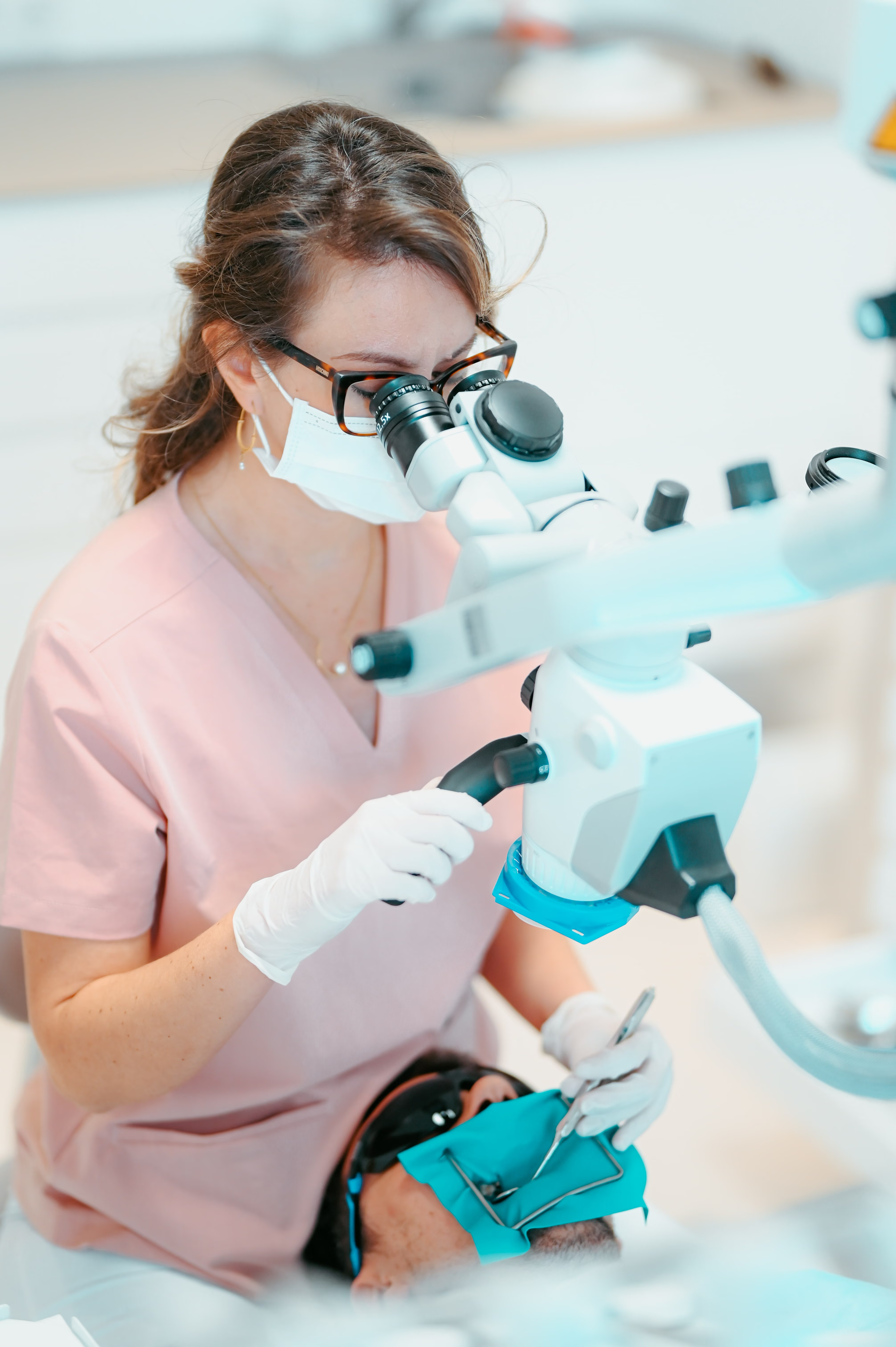
Behandlung unter dem Dentalmikroskop: DDr. Emina Kabil mit Assistentin

Mikroskopische Wurzelbehandlung Wien

Zahnerhalt dank moderner Endodontie

In unserer Ordination Zahnartist in Wien führen wir Wurzelbehandlungen unter dem OP-Mikroskop durch. Diese Form der Endodontie ermöglicht eine besonders genaue Sicht auf feine Wurzelkanäle, Verzweigungen und schwer erkennbare Strukturen im Zahninneren.

Für den Erhalt Ihres natürlichen Zahns und ein schmerzfreies Lächeln!

Icon: Öffnungszeiten
Di–Sa 9–18 Uhr
Icon: Adresse
Rudolfplatz 2/1, 1010 Wien
Icon: Kassen und Versicherung
Privat, SVS & KFAW
ZAHNMEDIZIN AUF HÖCHSTEM NIVEAU. IN WIEN. FÜR SIE.
Icon: Mikroskopische Wurzelkanalbehandlung

MIKROSKOPISCHE WURZELKANALBEHANDLUNG

Höchste Präzision.
Zahnerhalt im Fokus.
Icon: Schmerzbehandlung

SCHMERZBEHANDLUNG

Schnelle Hilfe.
Einfühlsam und effektiv.
Icon: Zahnerhaltende Behandlung

ZAHNERHALTENDE BEHANDLUNG

So viel wie nötig,
so wenig wie möglich.
Icon: Ästhetische Zahnmedizin

ÄSTHETISCHE ZAHNMEDIZIN

Für ein natürlich
schönes Lächeln.
DDr. Emina Kabil untersucht die Zähne einer PatientinBehandlung unter dem Dentalmikroskop: DDr. Emina Kabil mit Assistentin

What is a microscopic root canal treatment?

During a root canal treatment, inflamed or dead tissue is removed from the inside of the tooth. The root canals are then cleaned, disinfected, and sealed to prevent bacteria from entering.

The difference compared to traditional treatment lies in the improved visibility. Root canal treatment with a microscope is characterized by high magnification and precise illumination. This allows the dentist to better identify very fine canals, additional canal openings, pus, bacterial pockets, or small cracks.

In our practice, root canal treatments are performed exclusively using a microscope by DDr. Emina Kabil, M.Sc. This allows for particularly meticulous, tissue-sparing, and tooth-preserving work.
Icon: strahlender Zahn
Text line
Text line
Book an appointment

When is a root canal treatment
‍necessary?

A root canal treatment may be necessary if bacteria have reached the tooth nerve. Common causes include deep cavities, leaking fillings, a dental injury, or excessive stress on the tooth.

Typical signs of an inflamed tooth nerve include:
  • Severe or persistent toothache
  • Pain when biting down
  • Sensitivity to heat or cold
  • Throbbing pain
  • Swelling or a feeling of pressure
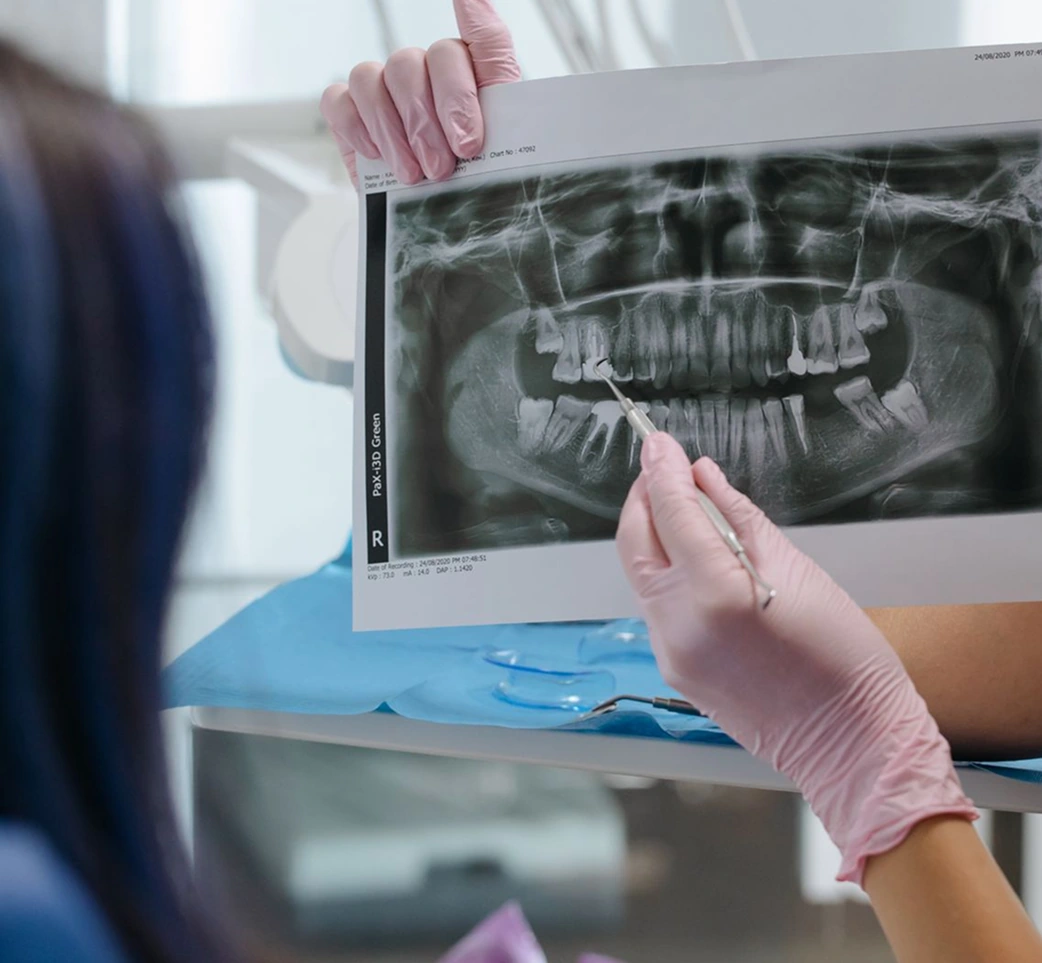
  • Inflammations that are often only visible on an X-ray
Sometimes an inflamed tooth causes hardly any discomfort. That is why a thorough examination and, if necessary, an X-ray are important.
DDr. Emina Kabil bei einer Wurzelbehandlung unter dem Dentalmikroskop

Why the microscope is so important for root canal treatment

The root canal system is often very fine, branched, and unique to each individual. Some canals are barely visible, if at all, to the naked eye. If a canal is overlooked or not cleaned thoroughly, an infection can persist or recur.

The surgical microscope helps the dentist see all structures inside the tooth in detail. This allows the treatment to be planned and performed more precisely, preserving as much healthy tooth structure as possible.

The advantages of microscopic root canal treatment are:

Better visibility

on fine root canals

More precise work

More precise cleaning & disinfection

Accuracy

Detection of additional canals & branches

Lower costs

No need for tooth extraction, which also eliminates the need for implants, bridges, or dentures

Tooth preservation

Endodontics allows the tooth to be saved

Higher success rate

Reduced risk of unnecessarily removing healthy tooth structure

Procedure for microscopic root canal treatment
This is how the treatment works in our practice:
1. Examination and diagnosis
First, the cause of the discomfort is precisely determined. To do this, we examine the affected tooth and take an X-ray if necessary. In complex cases, a digital volume tomography (DVT) scan may also be useful to assess structures in three dimensions.
2. Consultation and treatment planning
Before the treatment, we will explain the findings, the planned procedure, and the estimated costs to you. This way, you know exactly which steps are necessary and why the treatment is recommended.
3. Local anesthesia
The procedure is performed under local anesthesia and is therefore generally painless. If you feel anxious or uncertain, we will take our time, explain every step, and ensure a calm atmosphere.
4. Cleaning the root canals
The tooth is opened and inflamed tissue is removed. The canals are then prepared, cleaned, and disinfected under the microscope. The goal is to reduce the number of bacteria as much as possible.
5. Bacteria-tight seal
Once cleaned, the canals are filled and the tooth is sealed tightly. Depending on the condition of the tooth, it is then restored with a filling, a post-and-core build-up, and/or a crown to ensure the tooth is preserved for as long as possible.
1. Examination and diagnosis
First, the cause of the discomfort is precisely determined. To do this, we examine the affected tooth and take an X-ray if necessary. In complex cases, a digital volume tomography (DVT) scan may also be useful to assess structures in three dimensions.
2. Consultation and treatment planning
Before the treatment, we will explain the findings, the planned procedure, and the estimated costs to you. This way, you know exactly which steps are necessary and why the treatment is recommended.
3. Local anesthesia
The treatment is performed under local anesthesia and is therefore generally painless. If you are anxious or unsure, we take our time, explain every step, and ensure a calm atmosphere.
4. Cleaning the root canals
The tooth is opened and inflamed tissue is removed. The canals are then prepared, cleaned, and disinfected under the microscope. The goal is to reduce the number of bacteria as much as possible.
5. Bacteria-tight seal
After cleaning, the canals are filled and the tooth is sealed tightly. Depending on the condition of the tooth, it is then fitted with a filling, a post-and-core build-up, and/or a crown to preserve the tooth for as long as possible.
Zahnärztin zeigt ein Panoramaröntgen der Zähne

Revision of a root canal treatment
in Vienna

Teeth that have already undergone root canal treatment can also cause problems again. This happens, for example, if old root fillings are leaking, canals were missed, or bacteria remained inside the tooth.

During a root canal revision, the old root filling is removed. The canals are then cleaned, disinfected, and sealed again. The microscope is particularly helpful here, as it allows old filling materials, hidden canals, or fine structures to be identified more easily.

If a root-treated tooth causes pain again, it does not automatically mean it has to be extracted. A revision can help to save the tooth after all.

Apicoectomy under the
microscope

In some cases, a standard root canal treatment is not enough. Follow-up procedures, such as an apicoectomy, may be necessary. This is the case if inflammation at the root tip persists despite root canal treatment.

At the Zahnartist practice, we also perform these types of procedures. We will discuss with you whether an apicoectomy is necessary and how the procedure is carried out.
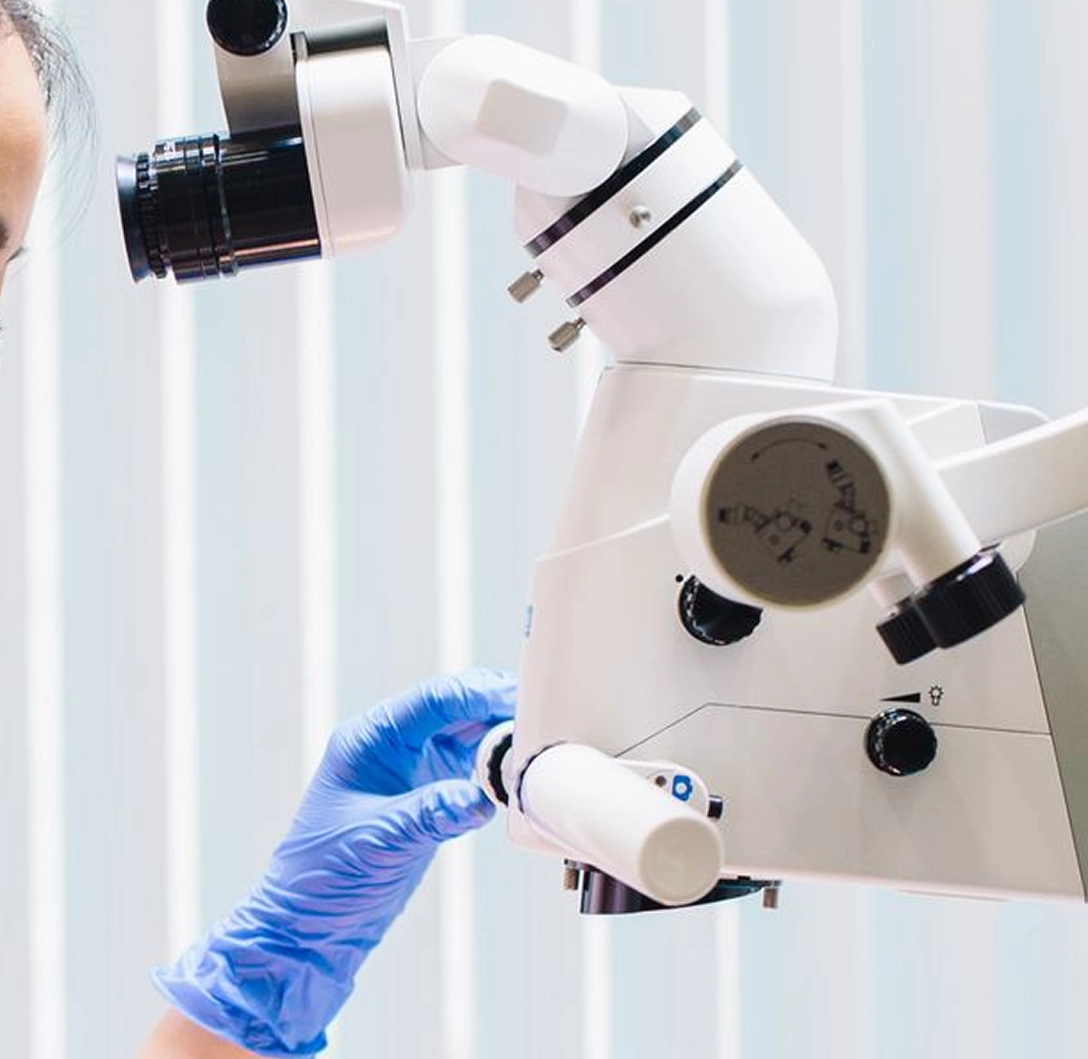
Dentalmikroskop für die mikroskopische Wurzelbehandlung
emergencies

Acute toothache?
Quick appointments in Vienna

Toothaches should be checked out quickly. At our practice, acute patients receive appointments quickly and easily—often on the same day.

Our practice also offers short-notice appointments on Saturdays. So, do not hesitate to get in touch with us!
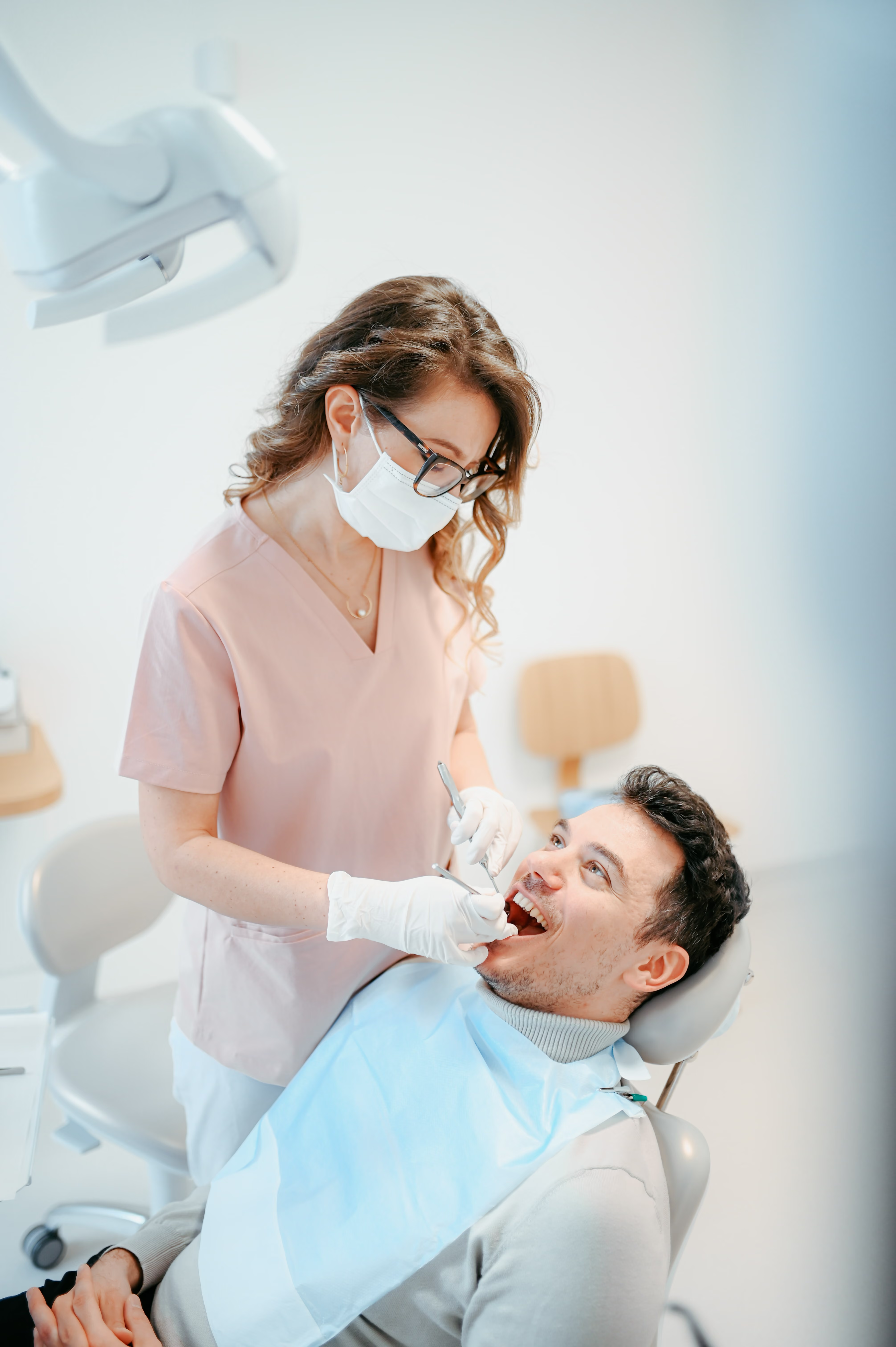
DDr. Emina Kabil bei der Behandlung eines Patienten in der Ordination Zahnartist

Root canal costs: What
you should know

The cost of a root canal treatment depends on the specific tooth, the number of canals, the degree of inflammation, and the complexity of the treatment. A revision is also usually more involved than an initial treatment.

We place great importance on cost transparency and will discuss the estimated costs before starting treatment. This way, you know in advance what treatment costs to expect.

Please note: Zahnartist is a private dental practice and only works directly with SVS and KFAW. However, you can submit your invoice to other insurance providers to receive partial reimbursement.
Zahnartist

Endodontics in Vienna with
DDr. Emina Kabil, M.Sc.

I am DDr. Emina Kabil, M.Sc., and have been working in several private practices in Vienna since 2015, specializing in pain management, endodontics, microscopic root canal treatments, and tooth preservation.

In 2024, I opened my practice at Rudolfsplatz 2/1 in 1010 Vienna. Here, we combine modern technology with plenty of time for your concerns and personal care. All treatment steps are explained clearly, and every treatment is tailored to your individual situation.

You and your teeth are in safe hands with us!

DDr. Emina Kabil vor dem Zahnartist-Logo in ihrer Ordination in Wien

One practice, 6 advantages

Specialized & certified

We specialize in microscopic root canal treatment and use an operating microscope for precise endodontics. Our team keeps up to date through regular training so that we can always offer you the best treatment according to current standards.

Open on Saturdays

You can get quick appointments at our practice. Especially in cases of acute pain, we strive to offer you an appointment on the same day. Since we are also open on Saturdays, urgent appointments are possible on weekends, and you can easily fit routine appointments into your daily schedule.

Anxious patients welcome

We want to make your root canal treatment as comfortable and stress-free as possible. That is why you will find a calm atmosphere and empathetic care with us. We are also happy to cater to the individual needs of anxious patients!

Personal care

We focus on personal care rather than a high-volume practice. We take our time and are happy to answer any questions you may have.

Clear explanations

Before every treatment, we will explain the individual steps, costs, and more. This allows you to make the right decision for yourself.

Cone beam computed tomography

Modern technology for precise treatment: Digital Volume Tomography (DVT) enables three-dimensional X-rays of teeth, bones, nerve paths, and surrounding structures.

Book your appointment for a microscopic root canal treatment in Vienna now

Are you suffering from a toothache, in need of a root canal treatment with a microscope, or looking for a practice in Vienna for a root canal revision? Then Zahnartist is the right place for you!

We take time for you and offer support in various languages. Our team speaks German, English, Bosnian, Croatian, Serbian, Arabic, Ukrainian, and Russian. Please feel free to contact us at any time!
Thank you! Your submission has been received!
Oops! Something went wrong while submitting the form.

Zahnartist – DDr. Emina Kabil, M.Sc.

Book your appointment now online, by phone, or via email. We look forward to welcoming you personally to our dental practice in the 1st district.

FAQ

What is a microscopic root canal treatment?

A microscopic root canal treatment is a root canal procedure performed under an operating microscope. This allows the dentist to better identify and more precisely treat fine canals, branches, and inflamed areas of the tooth.

Is a root canal treatment painful?

The treatment is performed under local anesthesia and is therefore generally painless. Each situation is assessed individually, and the treatment is adjusted accordingly.

When do I need a root canal treatment?

A root canal treatment is necessary when the tooth nerve is inflamed or dead. Common signs include severe toothache, pain when biting, or sensitivity to temperature.

What is a root canal revision?

During a revision, an old root filling is removed and the tooth is treated again. This may be necessary if bacteria have resettled or if inflammation persists.

How much does a root canal treatment cost?

The costs depend on the effort involved, the tooth in question, and the complexity of the treatment. Before the procedure, you will receive a comprehensive explanation of the expected costs.

Can my tooth be saved with a root canal treatment?

Yes, that is exactly the goal. Microscopic root canal treatment is intended to save the natural tooth and avoid tooth extraction whenever possible.

Do you offer short-notice appointments for toothaches?

Yes. For acute toothaches, we try to offer appointments on short notice, often on the same day. Our practice is also open on Saturdays.

Nach oben