Behandlung unter dem Dentalmikroskop: DDr. Emina Kabil mit Assistentin

Mikroskopische Wurzelspitzenresektion Wien

Den eigenen Zahn erhalten

Wurzelbehandelte Zähne schmerzen wieder? Dann kann eine Wurzelspitzenresektion sinnvoll sein.
Als Spezialisten für Endodontie stehen Ihnen DDr. Emina Kabil, M.Sc. und Ihr Team zur Seite.

Icon: Öffnungszeiten
Di–Sa 9–18 Uhr
Icon: Adresse
Rudolfplatz 2/1, 1010 Wien
Icon: Kassen und Versicherung
Privat, SVS & KFAW
ZAHNMEDIZIN AUF HÖCHSTEM NIVEAU. IN WIEN. FÜR SIE.
Icon: Mikroskopische Wurzelkanalbehandlung

MIKROSKOPISCHE WURZELKANALBEHANDLUNG

Höchste Präzision.
Zahnerhalt im Fokus.
Icon: Schmerzbehandlung

SCHMERZBEHANDLUNG

Schnelle Hilfe.
Einfühlsam und effektiv.
Icon: Zahnerhaltende Behandlung

ZAHNERHALTENDE BEHANDLUNG

So viel wie nötig,
so wenig wie möglich.
Icon: Ästhetische Zahnmedizin

ÄSTHETISCHE ZAHNMEDIZIN

Für ein natürlich
schönes Lächeln.
DDr. Emina Kabil untersucht die Zähne einer PatientinBehandlung unter dem Dentalmikroskop: DDr. Emina Kabil mit Assistentin

When inflammation at the
root tip
does not heal

The goal of a standard root canal treatment is to save your natural tooth. However, sometimes inflammation persists around the root tip despite careful root canal therapy. In such cases, a microscopic apicoectomy may be the right solution. This involves treating the inflamed root tip through a small surgical opening, without removing the entire tooth.

At the Zahnartist practice in 1010 Vienna, we carefully evaluate whether this procedure is the appropriate tooth-saving solution for you. DDr. Emina Kabil, M.Sc. combines experience in endodontics with precise diagnostics and the use of a surgical microscope. You will receive a clear assessment, a transparent treatment plan, and plenty of time to have your questions answered.
Icon: strahlender Zahn
Text line
Text line
Book an appointment

What is a microscopic apicoectomy?

An apicoectomy is a surgical procedure performed to save a tooth. It involves removing the inflamed tip of a tooth root along with the diseased tissue in the jawbone, without the need to extract the tooth itself.

The area is locally anesthetized, and the dentist makes an incision in the gums. Access to the root tip is gained through the jawbone. The inflamed root tip is trimmed by approximately 3 millimeters, and the infected tissue is completely removed. The root canal is cleaned from the end and sealed to be bacteria-proof. Finally, the gums are sutured.

The term "microscopic" refers to the use of a surgical microscope. The root tip and its surrounding area are small, anatomically complex structures. The microscope magnifies the treatment field and provides targeted illumination, allowing these fine structures to be assessed more accurately.

For you, this means that your treatment is carried out with a high standard of accuracy and precision.
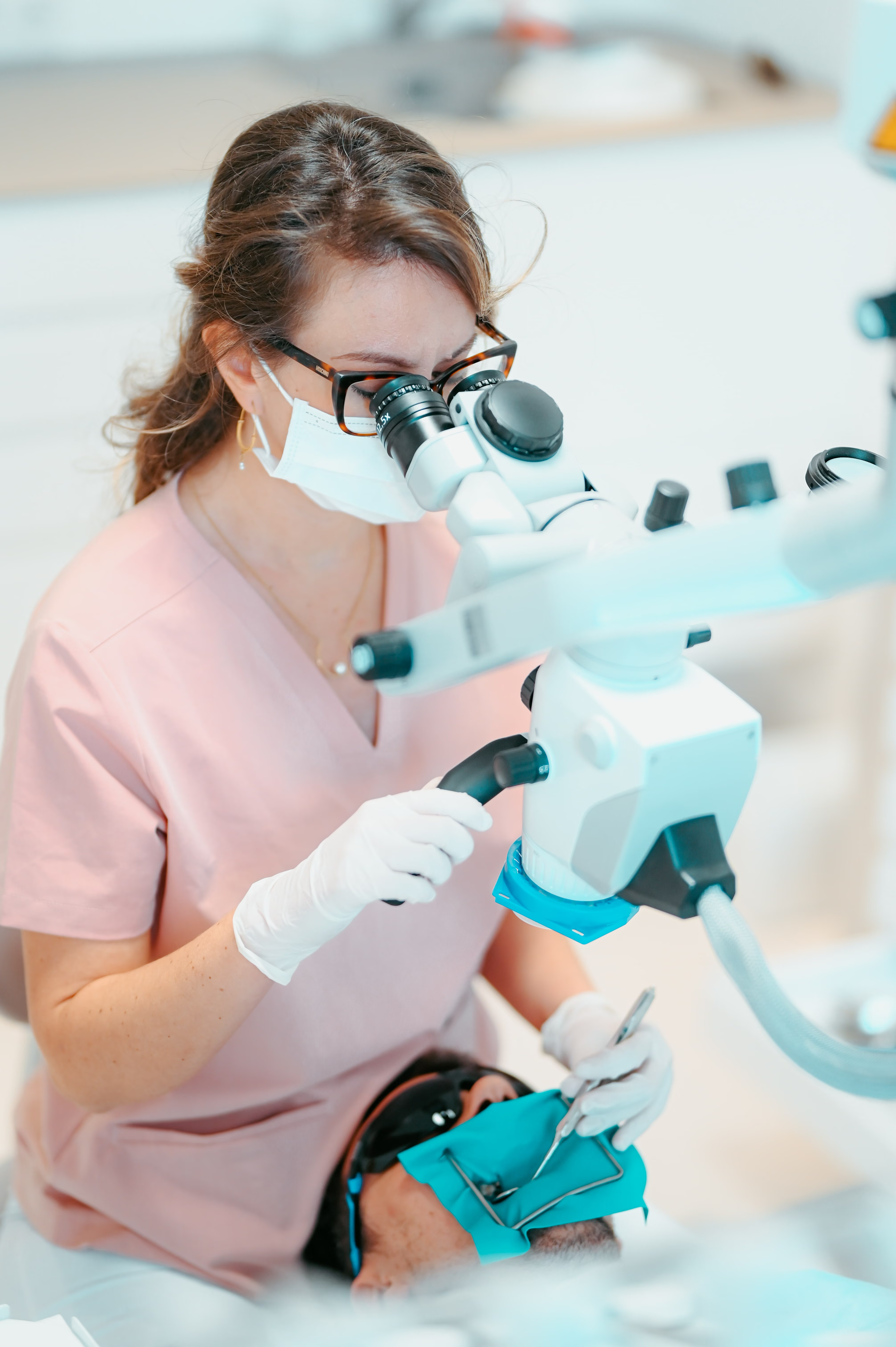
DDr. Emina Kabil bei einer Wurzelbehandlung unter dem Dentalmikroskop

When can an apicoectomy be useful?

Whether an apicoectomy is necessary always depends on the diagnosis, the position of the tooth, and previous treatment steps.

Possible reasons for an apicoectomy include:
Icon: Zahn mit Kreis (Diagnostik)

Pain

when biting or tapping on the tooth
Icon: Zahn mit Wurzelkanal

Root canal inaccessible

e.g., due to an inserted post or severely curved or narrowed root canals
Icon: Zahn mit Glanz (ästhetische Zahnmedizin)

Recurrent swelling

or a fistula on the gums
Icon: Zahn mit Wurzelkanal

Discomfort in
a tooth

that has already undergone root canal treatment
Icon: Zahn mit Glanz (ästhetische Zahnmedizin)

Toothache

that radiate or suddenly intensify
Icon: Zahn mit Kreis (Diagnostik)

Persistent
pressure

in the jaw area

What to expect at your appointment

1. Diagnosis and X-rays
The process begins with a thorough examination and a discussion about your symptoms. X-rays help determine if and where an infection is present. For complex cases, a digital volume tomography (DVT) scan may be useful. This three-dimensional X-ray helps to spatially assess the root, the bone, and important surrounding structures.
2. Careful planning
Afterward, we will discuss with you whether a revision, a microscopic apicoectomy, or another approach is recommended. You will learn what steps are planned, what follow-up treatment may be necessary, and the expected costs.
3. Treatment under local anesthesia
The procedure is performed under local anesthesia and is therefore generally painless. If you feel anxious or uncertain, we will take our time, explain every step, and ensure a calm atmosphere.
4. Sealing
Finally, the wound is closed with stitches. We will provide you with specific instructions for the recovery period, including information on dental care, aftercare, and follow-up appointments. If medication or further treatment of the tooth is necessary, we will discuss this with you directly.
5. Aftercare and healing
Once cleaned, the canals are filled and the tooth is sealed tightly. Depending on the condition of the tooth, it is then restored with a filling, a post-and-core build-up, and/or a crown to ensure the tooth is preserved for as long as possible.
Zahnärztin behandelt eine Patientin mit einem zahnärztlichen Instrument

Root canal revision, apicoectomy, or tooth extraction – which treatment is the right one?

A root-treated tooth that starts hurting again does not automatically mean it must be removed. Which treatment is appropriate depends on many factors.

Options include:
  • Root canal revision: Repeating the previous root canal treatment. The tooth is preserved.
  • Apicoectomy: The tip of the tooth root is treated. The tooth is preserved.
  • Tooth extraction & dental implants: only when tooth preservation is not possible or not advisable from a dental perspective.

What you should know before making a decision

A microscopic apicoectomy can enable tooth preservation, but it is not a guarantee. Only a precise examination will show whether the treatment has a good prognosis.

Decisive factors include, for example:
  • the condition of the tooth crown and the remaining healthy tooth structure
  • the length and shape of the root
  • the extent of the inflammation
The question of whether the tooth can be permanently stabilized after the procedure also plays an important role.

That is precisely why we take the time to plan and explain the opportunities, limitations, and alternatives.
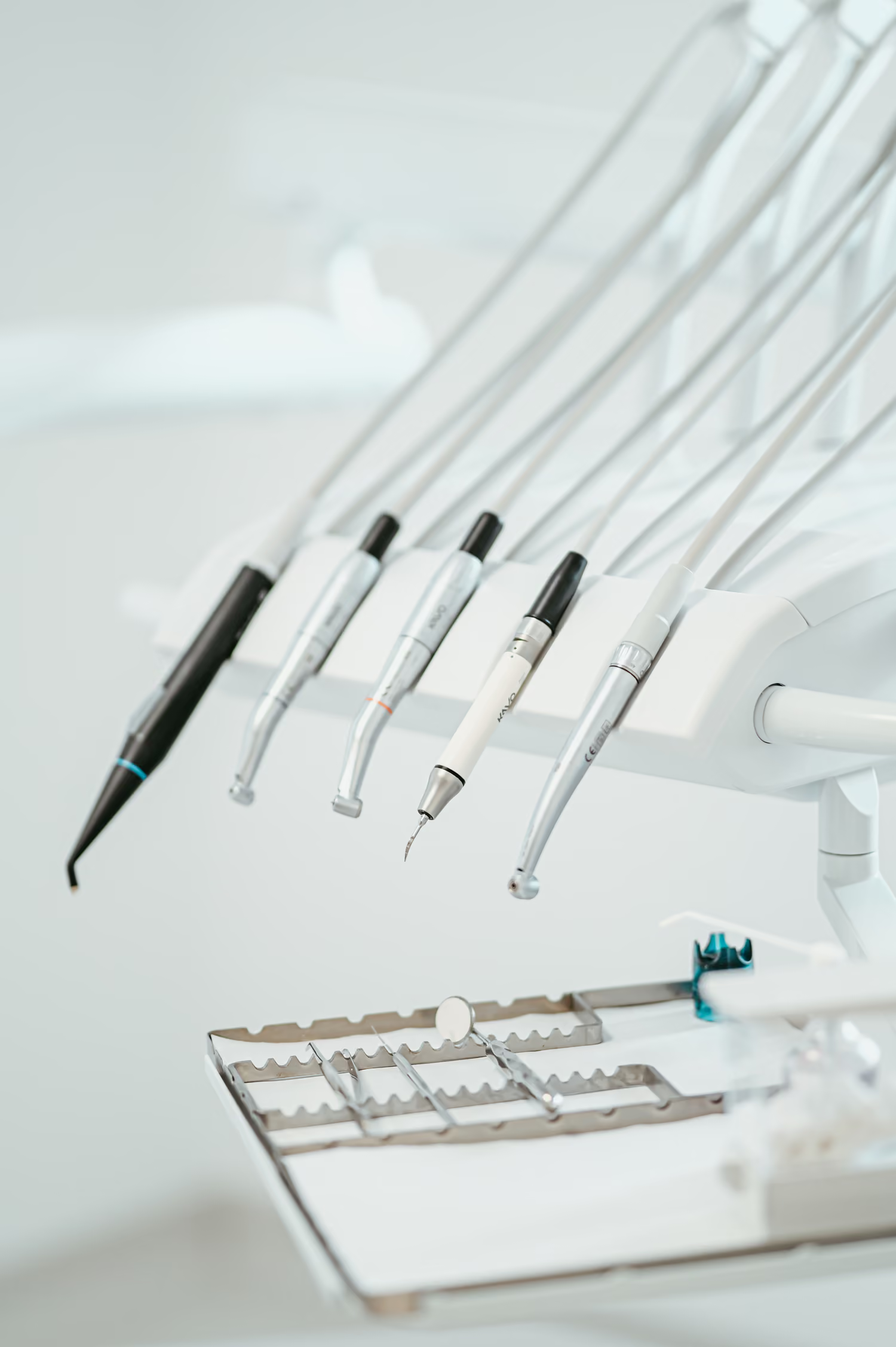
Zahnärztliche Hand- und Winkelstücke an der Behandlungseinheit
emergencies

Get acute pain in a root-treated
tooth checked quickly

Severe pain, discomfort when biting, a feeling of pressure, or new swelling around a root-treated tooth should be examined promptly. An X-ray examination provides clarity and helps determine the appropriate next step.

At Zahnartist, you can get a quick and uncomplicated appointment for acute tooth pain. We will identify the cause of the pain, discuss the necessary initial treatment, and show you whether a revision or a microscopic apicoectomy is an option.

Since our practice is also open on Saturdays, our team is available for emergency appointments on that day as well.

6 reasons to choose Zahnartist

For many patients, an apicoectomy is associated with uncertainty.
In this situation, personal and clear consultation is particularly important.

Specialization

DDr. Emina Kabil, M.Sc. specializes in pain management and endodontics (tooth preservation and root canal treatment).

Open on Saturdays

Our practice is open from Tuesday to Saturday, until 6:00 PM each day, making it easy to fit appointments into your daily schedule.

Anxious patients welcome

We also approach patients with dental anxiety in a calm and empathetic manner. We explain the treatment in advance, discuss individual steps, and take your questions and needs into account.

Time for your concerns

At the Zahnartist practice on Rudolfsplatz in Vienna, we take the time to explain your diagnosis in an understandable way and to plan the next steps together with you.

Clear explanations

In the event of acute toothache, we strive to provide a quick and uncomplicated appointment, often on the same day.

Cone beam computed tomography

Working with an operating microscope and cone beam computed tomography (CBCT) makes the treatment even more precise.
DDr. Emina Kabil bei der Behandlung eines Patienten in der Ordination Zahnartist

Costs of a microscopic apicoectomy

The costs of an apicoectomy depend on the individual scope of treatment. Key factors include the affected tooth, the position and number of its roots, the extent of the inflammation, as well as the necessary diagnostics and follow-up care. In complex cases, a CBCT scan may also be part of the treatment and thus affect the costs.

At the beginning, we will provide you with a transparent overview of the expected costs.

Zahnartist is a private dental practice and works with SVS and KFAW.
You can submit the invoice to all insurance providers to receive a (partial) reimbursement of the invoice amount. Please feel free to contact us before your appointment if you have any questions about billing or your insurance.
Zahnartist

Microscopic
apicoectomy in Vienna:
Book an appointment at Zahnartist

Do you have persistent discomfort in a tooth that has already undergone root canal treatment, are you looking for an assessment regarding an apicoectomy, or would you like to find out if your tooth can be saved? Schedule an appointment at Zahnartist in 1010 Vienna.

In our practice, we will examine you thoroughly, explain the possible treatment paths in clear terms, and plan the next steps together with you. DDr. Emina Kabil, M.Sc. and her team are here for you, even in cases of acute toothache or when you need a short-notice appointment.

DDr. Emina Kabil vor dem Zahnartist-Logo in ihrer Ordination in Wien

FAQ about microscopic apicoectomy in Vienna

Why is an apicoectomy performed with a microscope?

Working under an operating microscope provides a precise view of the treatment area. This is particularly relevant when the root tip is small, curved, or difficult to access due to its position.

What sets Zahnartist apart?

At Zahnartist, you won't receive a one-size-fits-all recommendation. DDr. Emina Kabil, M.Sc. is a dentist specializing in endodontics who will explain in clear terms what options are available, why a specific treatment is being proposed, and what consequences it may have for your tooth.

What is the difference between a root canal treatment and an apicoectomy?

During a root canal treatment, the tooth is cleaned, disinfected, and sealed from the inside via the crown. In an apicoectomy, access is gained from the outside through the gums and the jawbone to treat the inflamed root tip. An apicoectomy is usually only considered if a root canal treatment has already been performed but the inflammation has returned.

What is a root canal revision?

During a revision, a tooth that has already undergone root canal treatment is treated again from the inside. Old root filling materials are removed, the canals are cleaned again, and then sealed tightly.

Is an apicoectomy painful?

An apicoectomy is performed under local anesthesia and is generally painless during the procedure.

How long does an apicoectomy take?

You should expect the procedure to take approximately 30 to 60 minutes.

Is an apicoectomy possible during pregnancy?

An apicoectomy is usually postponed during pregnancy. In emergencies, it can be performed during the second trimester.

What are the risks associated with an apicoectomy?

As with any surgical procedure, swelling, bruising, minor post-operative bleeding, or discomfort may occur.

What should I keep in mind after an apicoectomy?

After the procedure, you should take it easy and follow the instructions regarding oral hygiene and wound care. It is best to eat soft foods for the first few days. You should initially avoid very hot food and drinks, as well as strenuous physical activity.

When can I return to work after an apicoectomy?

This depends on your healing process, the extent of the procedure, and your profession. If you have a physically demanding job, you may need a longer recovery period than someone with a sedentary role. We will discuss what is appropriate for you individually following the procedure.

Are there alternatives to an apicoectomy?

Depending on the diagnosis, a root canal revision may be an alternative. If saving the tooth is no longer possible or medically advisable, we can discuss tooth extraction followed by restorative options, such as dental implants.

What are the success rates for an apicoectomy?

The chances of success depend on several factors. In general, however, the success rate is very high.

How much does a microscopic apicoectomy cost?

Costs depend on your individual diagnosis, the complexity of the treatment, the necessary diagnostics, and follow-up care. We will provide you with a transparent estimate of the expected costs at the beginning. Zahnartist is a private dental practice and works with SVS and KFAW.

Nach oben